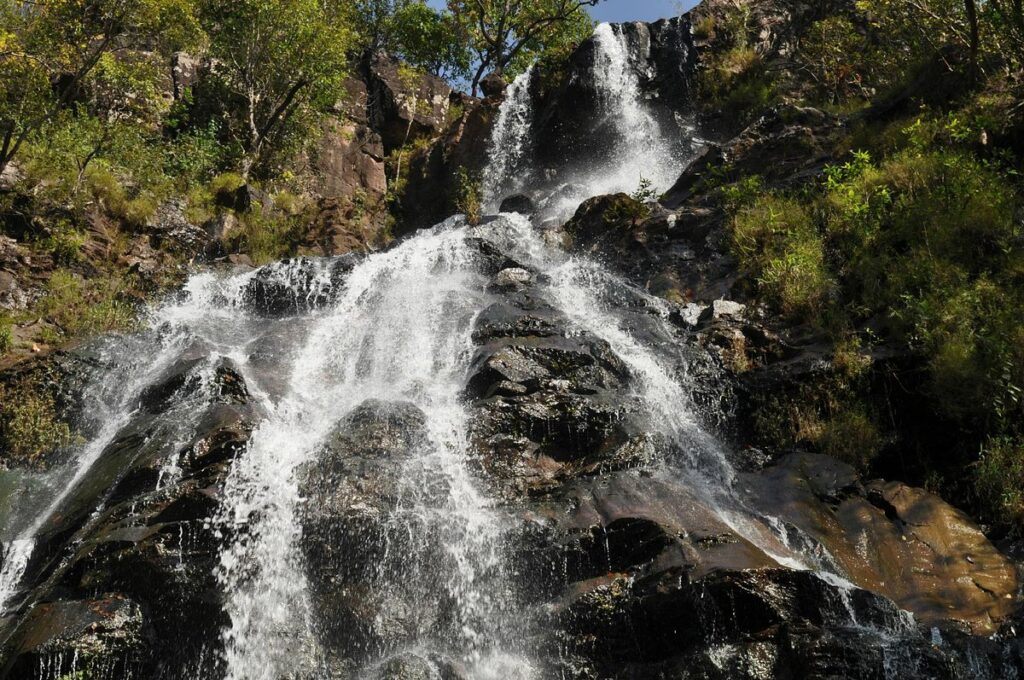
Bee Fall: The Lifeline of Panchmarhi Hill Station
Nestled amidst the dense forests and rugged terrain of the Satpura Range, Bee Fall is one of the most beautiful and well-known natural attractions of Panchmarhi Hill Station in Madhya Pradesh. Often referred to as the heart of Panchmarhi, Bee Fall is not just a waterfall but a place where nature reveals its calm, power, and rhythm all at once.
Panchmarhi, popularly called the “Queen of Satpura,” is the only hill station in Madhya Pradesh. Surrounded by thick sal forests, ancient rocks, and cool mountain air, it offers a refreshing escape from the heat of the plains. Among its many waterfalls, caves, and viewpoints, Bee Fall holds a special place due to its scenic beauty and importance to the region.
Location and Origin
Bee Fall, also locally known as Jamuna Prapat, is situated about 3 to 5 kilometers from the main Panchmarhi town. It lies deep within a forested area and is reached by descending a long flight of steps that wind through greenery and rocky paths. The journey to the waterfall itself feels like an adventure, as visitors walk through quiet forests filled with the sounds of birds and flowing water.
The waterfall is formed by a perennial stream that flows down from a height of approximately 35 meters (115 feet). As the water crashes against the rocks below, it creates a continuous humming sound. This sound resembles the buzzing of bees, which is believed to be the reason behind the name “Bee Fall.”
Natural Beauty and Experience
What makes Bee Fall truly special is its raw and untouched beauty. The water cascades with force, forming a cool, misty environment that feels soothing, especially during the summer months. At the base of the fall, natural pools are formed where visitors can relax, sit quietly, or enjoy a refreshing dip under supervision.
During the monsoon season, Bee Fall comes alive with roaring water and lush green surroundings. The rocks glisten, the forest looks fresher, and the entire area feels vibrant and full of life. Even in winter, the waterfall continues to flow gently, offering peaceful views and a calm atmosphere.
Importance to Panchmarhi
Bee Fall is not only a tourist attraction but also an important source of water supply for Panchmarhi. The clean and fresh water from the fall supports the local population, making it a natural lifeline for the hill station. This practical importance adds to its value and highlights the need for its conservation.
The site also plays a role in supporting local biodiversity. The surrounding forests are home to various plants, insects, birds, and animals that depend on the continuous flow of water.
Tourism and Conservation
Bee Fall attracts thousands of tourists every year, especially nature lovers, photographers, and adventure seekers. However, with increasing visitors comes the responsibility to protect this natural treasure. Littering, pollution, and careless behavior can harm the fragile ecosystem around the waterfall.
Authorities and locals encourage visitors to maintain cleanliness, avoid plastic use, and respect the natural surroundings. Protecting Bee Fall ensures that future generations can experience its beauty just as it exists today.
Best Time to Visit
The best time to visit Bee Fall is from October to June, when the weather is pleasant and the paths are safe to walk on. While the monsoon season enhances the beauty of the waterfall, the steps can become slippery, so caution is advised.
Conclusion
Bee Fall is more than just a scenic spot — it is the soul of Panchmarhi Hill Station. With its powerful waterfall, peaceful surroundings, and vital role in sustaining life, Bee Fall represents the perfect balance between beauty and usefulness. Visiting Bee Fall is not just about sightseeing; it is about connecting with nature, slowing down, and appreciating the simple wonders that the Earth offers.